Understanding an organization’s Balance Sheet, or Statement of Condition, was the first case study lesson taught to our new class at Harvard Business School many years ago. Without that understanding as a basis for a business’s financial situation, one could not begin to properly analyze how to address the issues in the over 250 problem cases we reviewed while we were there.
Our nation is chronically committed to spending more money each year than it can politically raise through increased revenues, mainly taxes. Any non-partisan, well-informed business executive looking at our nation’s Balance Sheet understands that significant policy changes must be made. Likewise, as an experienced business entrepreneur, Donald Trump must have spent many sleepless hours pondering how a country, with a broken economy and out of money, can turn itself around before its citizens lose faith in our government and revolt.
How successful the policies Trump implements are to repair our economy will be his greatest gamble as a U.S. president, not his recent military engagement with Iran.
Trump’s 2016 election prevented further extensions to the unsustainable Welfare State which the Obama Administration had expanded greatly with Obamacare. Without help from his party’s political opponents, Trump lowered taxes in both his terms, a counterintuitive policy that raises revenues that is consistent with history. Unfortunately, the built-in structure of progressive government spending has consistently driven federal spending faster than revenues can be increased. This fact is the built-in reality of American political life since the Bush II Administration in 2001.
But the COVID pandemic cost Trump the 2020 election to Joe Biden. Federal spending under the Biden Administration again increased rapidly, with major energy subsidies passed in its attempt to eliminate fossil fuel energy use. This set the stage for federal debt to rise to over $40 trillion, with the annual deficit of $2 trillion extending indefinitely into the future.
Based on actions in his second term, Trump recognized that U.S. trade policies following World War II favored foreign companies, undermining the growth, profitability, and often the existence of similar companies in America. Trump began using tariffs to rebalance foreign trade that had slowed the U.S. economy and federal tax revenues. He used tariffs to negotiate major new investments in American industry to create U.S. jobs. He also realized that the U.S. military was providing our allies unreciprocated defense and guaranteed open international trade routes long after the Cold War ended. As a result, American defense commitments to NATO and elsewhere are being reviewed.
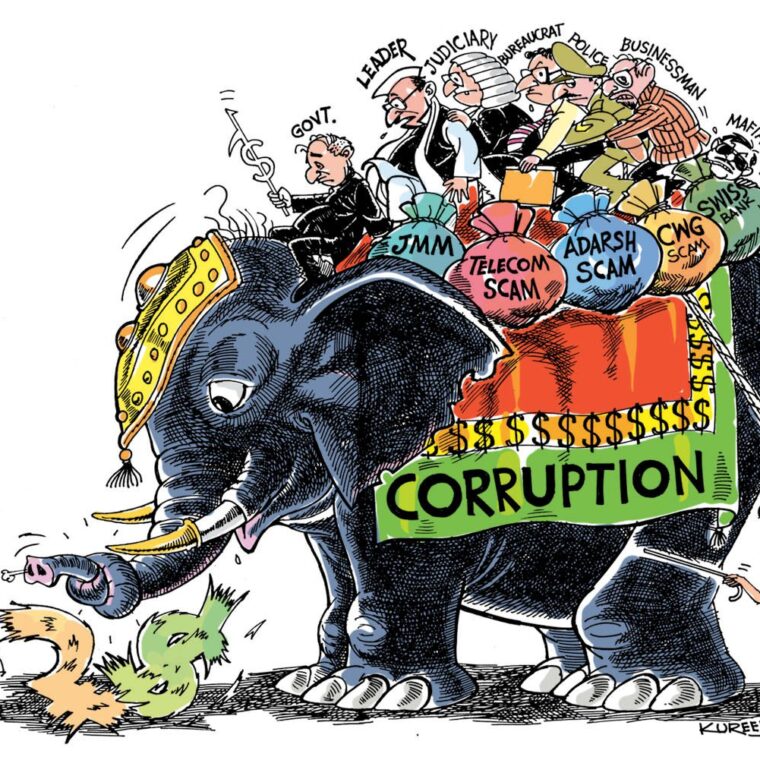
Serving the uncontrollable American welfare system, regulated segments of the economy are holding back U.S. productivity increases that strong growth depends. Trump’s gamble could be assured if Artificial Intelligence Systems (AI) can be wisely used to ensure that federal welfare checks go to those intended, as defined by the laws of Congress. In the future, could the AI World reduce previously unattainable fraud, corruption, and abuse? Could welfare provided be evaluated and optimized? Could proper results replace good intentions?
Trump gambled that the changes he made in trade policy, and the resulting growth anticipated in the U.S. economy, would begin to reverse the relationship between spending growth and revenue growth. However, Congress must develop a comprehensive return to a more balanced market economy where the federal government does not spend more than it takes in.
Some Americans want the Trump agenda herein described to fail. They see our future continuing to the next level of welfare statism, which is already more costly than our nation has been able to afford. Others are openly advocating for changing our market system to a socialist-style economy, which can only be implemented by Americans accepting a slow economic death under authoritarian rule, or revolution.
No one knows when our increasing federal debt will reach its inevitable historical breaking point, and bring our economy crashing down, as it did for Rome, the Soviet Union, and all other overextended empires.
Change is coming! We may still have the time to control our own fiscal destiny. If we choose not to do so, then the vagaries of Conquest, War, Famine, and Plague will doubtless decide that time for us.
TW3
September 3, 2026
John Whitmore Jenkins
www.jenkins-speaks.com
john@jenkins-speaks.com